PHCN vs Private DISCOs: Who Actually Owns Your Electricity in Nigeria?
Understand the difference between PHCN and modern private DISCOs, who controls your power supply, and how electricity distribution works in Nigeria today.
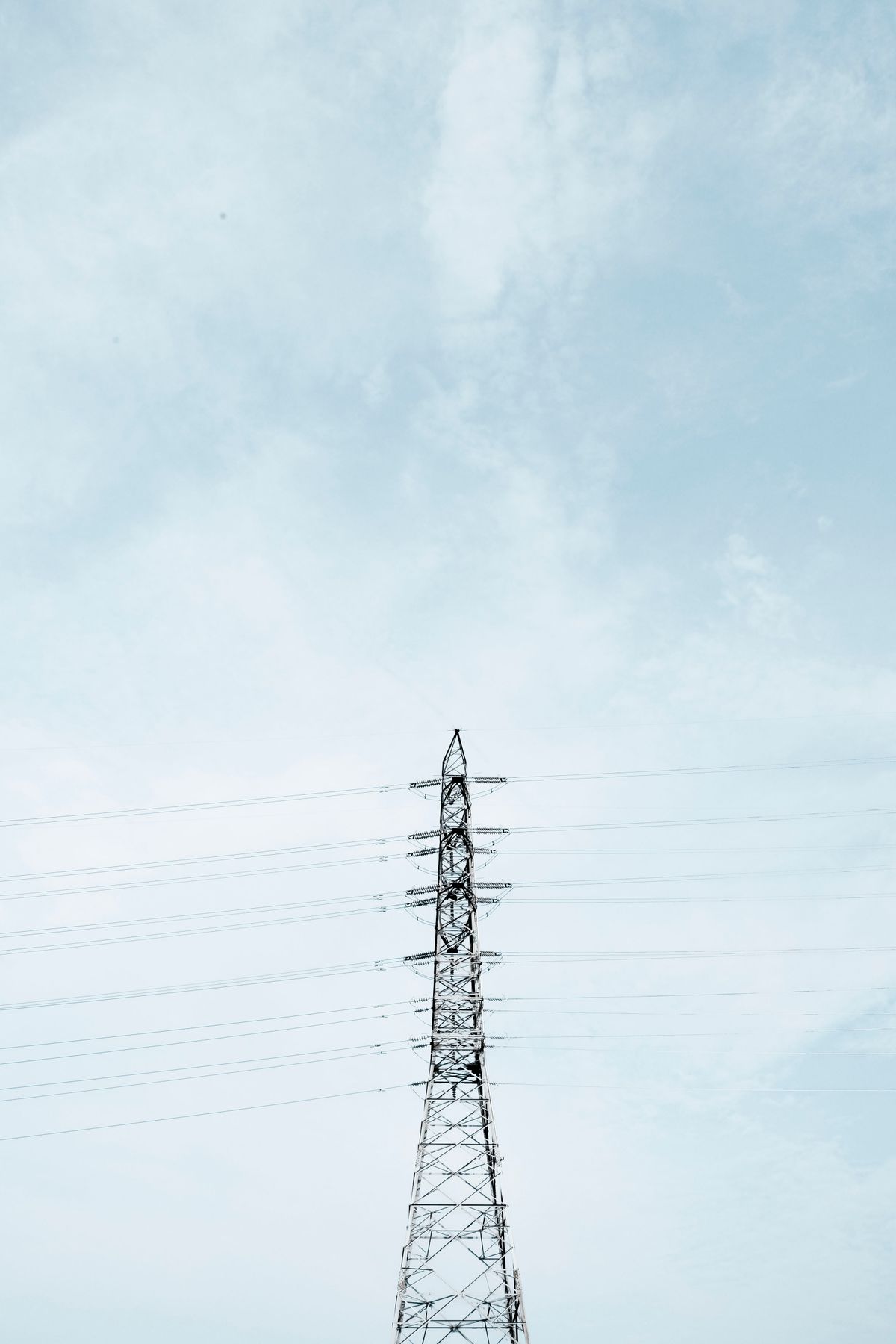
When lights suddenly flash on in a Nigerian neighborhood after three days of total darkness, people still instinctively shout "Up NEPA!" even though the National Electric Power Authority ceased to exist more than two decades ago. The Power Holding Company of Nigeria (PHCN) was supposed to replace NEPA, but in November 2013, the Federal Government officially handed power distribution over to private companies known as Distribution Companies (DISCOs).
If you are trying to buy electricity tokens right now without queuing at a crowded office or dealing with failed banking apps, you can purchase tokens instantly through Vtyield guest electricity. To learn how tariff bands and meter upgrades work, visit our electricity guide hub.
Understanding who actually owns and manages your power supply helps you know who to hold accountable when transformers blow, why tariff bands change, and where your electricity money actually goes.
The Journey from NEPA to PHCN and Private DISCOs
To understand today's electricity market, you have to look at the three distinct eras of Nigerian power governance:
1. The NEPA Era (1972 to 2005): The National Electric Power Authority had a total monopoly over everything. NEPA generated the power at dams, transmitted it across high-voltage pylons, collected monthly estimated bills, and sent ladder-carrying technicians to cut wires. Because one federal agency managed every single moving part with limited investment, customer service was notoriously poor.
2. The PHCN Transition (2005 to 2013): The Electric Power Sector Reform Act (EPSRA) of 2005 dissolved NEPA and created the Power Holding Company of Nigeria as a transitional umbrella company. The goal was to break the monopoly into eighteen independent operating companies: six generating firms, one transmission operator, and eleven regional distributors.
3. The Privatization Era (November 2013 to Present): On November 1, 2013, the Federal Government formally handed over generation and distribution assets to private investors, retaining only the transmission grid under state ownership.
Today, PHCN as an operating entity does not exist. It only remains as a holding structure (NELMCO) managing legacy pension debts and stranded government property.
How Nigerian Electricity Is Structured Today
Electricity in Nigeria operates across three distinct operational layers. When light goes off in your house, the fault could be sitting at any of these three stages:
1. Generation Companies (GENCOs)
GENCOs are private generation firms that produce electricity from hydro dams (like Kainji, Jebba, and Shiroro) and thermal gas plants (like Egbin, Geregu, and Ughelli). They generate megawatts of power and sell it into the national pool.2. Transmission Company of Nigeria (TCN)
The TCN is the only segment of the power value chain that remains 100 percent owned by the Federal Government. TCN operates the National Control Centre in Osogbo, managing the national grid and high-voltage transmission lines that carry bulk power from power plants across state borders to local substations. When the national grid collapses, TCN is the agency working to restore system frequency.3. Distribution Companies (DISCOs)
DISCOs are regional private distribution companies. They buy bulk power from the grid, step it down through neighborhood 33kV and 11kV transformers, run street cables to your house, issue prepaid meters, and collect payments. If your local transformer trips or your street cable snaps, your DISCO is responsible for fixing it.The 11 Electricity DISCOs in Nigeria and States Covered
There is no single national DISCO. Nigeria is divided into eleven regional distribution territories:
| DISCO Name | Headquarters | States Covered |
|---|---|---|
| IKEDC (Ikeja Electric) | Alausa, Ikeja | Parts of Lagos (Ikeja, Ikorodu, Oshodi, Abule Egba, Akowonjo) |
| EKEDC (Eko Electricity) | Marina, Lagos | Southern Lagos (Island, Lekki, Victoria Island, Festac) and parts of Ogun State |
| AEDC (Abuja Electricity) | Abuja | FCT Abuja, Kogi, Nasarawa, Niger State |
| IBEDC (Ibadan Electricity) | Ibadan | Oyo, Ogun, Osun, Kwara, and parts of Niger, Ekiti |
| BEDC (Benin Electricity) | Benin City | Edo, Delta, Ondo, and Ekiti States |
| EEDC (Enugu Electricity) | Enugu | Abia, Anambra, Ebonyi, Enugu, Imo States |
| PHEDC (Port Harcourt) | Port Harcourt | Rivers, Bayelsa, Cross River, Akwa Ibom States |
| KEDCO (Kano Electricity) | Kano | Kano, Katsina, Jigawa States |
| KAEDCO (Kaduna Electric) | Kaduna | Kaduna, Kebbi, Sokoto, Zamfara States |
| JEDC (Jos Electricity) | Jos | Plateau, Bauchi, Benue, Gombe States |
| YEDC (Yola Electricity) | Yola | Adamawa, Borno, Taraba, Yobe States |
Who Regulates the DISCOs? Meet NERC
While DISCOs are privately run business consortiums, they do not have the power to set their own electricity prices at will. All tariff rates, customer service standards, meter rollout rules, and billing caps are strictly set by the Nigerian Electricity Regulatory Commission (NERC).
Under NERC guidelines:
Why Does Your Prepaid Token Give Fewer Units Than Before?
Many homeowners notice that paying ₦10,000 today gives fewer kilowatt-hour (kWh) units than it did two years ago. This has nothing to do with digital payment platforms taking hidden deductions.
When you buy electricity through Vtyield guest electricity, your payment passes directly into your DISCO's vending gateway. The number of units generated depends on three official factors:
1. Your Feeder Band: Band A customers pay higher rates per unit than Band B or Band C customers.
2. Value Added Tax (VAT): Under Nigerian tax law, 7.5% VAT applies to electricity consumption.
3. Monthly Fixed Charges or Arrears: If your property had old accumulated debts on an analog postpaid meter before converting to prepaid, the DISCO may automatically deduct a percentage (often 10% to 20%) from every recharge until the old balance clears.
Common Myths About Nigerian Electricity
Frequently Asked Questions
Is PHCN still in charge of electricity in Nigeria?
No. PHCN was unbundled and privatized in November 2013. Private generation companies produce power, the Transmission Company of Nigeria moves it, and 11 private DISCOs distribute it to homes and businesses.Why do Nigerians still say "Up NEPA"?
"Up NEPA" remains a popular cultural expression of relief and joy whenever power returns, surviving across generations despite the company being dissolved decades ago.Who should I contact if my transformer blows?
You should report damaged transformers, snapped lines, or neighborhood blackouts directly to your regional private DISCO (such as Ikeja Electric, Eko DISCO, or AEDC), not the federal government.Can I switch from one DISCO to another?
No. DISCOs operate under geographical franchise areas designated by NERC. You must use the specific DISCO assigned to the state and local government area where your building is located.How do I check which tariff band my building belongs to?
You can check your band on your latest electricity bill, on your DISCO customer portal by entering your meter number, or by contacting your DISCO customer care desk.Get more like this — free
No spam. Just useful Nigerian fintech tips, once a week.
You might also like
Electricity Units Calculator Nigeria: How Many kWh Do You Get for Your Money?
Calculate exactly how many prepaid electricity units (kWh) you receive for N5,000, N10,000, or N20,000 in Nigeria across Band A, B, and C with 7.5% VAT accounted for.
Buy Port Harcourt Electricity (PHED) Prepaid Token Online: Step-by-Step
Step-by-step guide to recharge your PHED prepaid electricity meter online across Rivers, Bayelsa, Cross River, and Akwa Ibom without queueing or losing money to network delays.
Buy Ibadan Electricity (IBEDC) Prepaid Token Online: Step-by-Step
Step-by-step guide to buy IBEDC prepaid electricity tokens online across Oyo, Ogun, Osun, and Kwara without queueing at cash offices or losing money to network delays.
Ready to try it out?
Airtime, cheap data, electricity tokens, cable TV — delivered in seconds. No queues, no agents.
Account saves your history & earns you referral bonuses